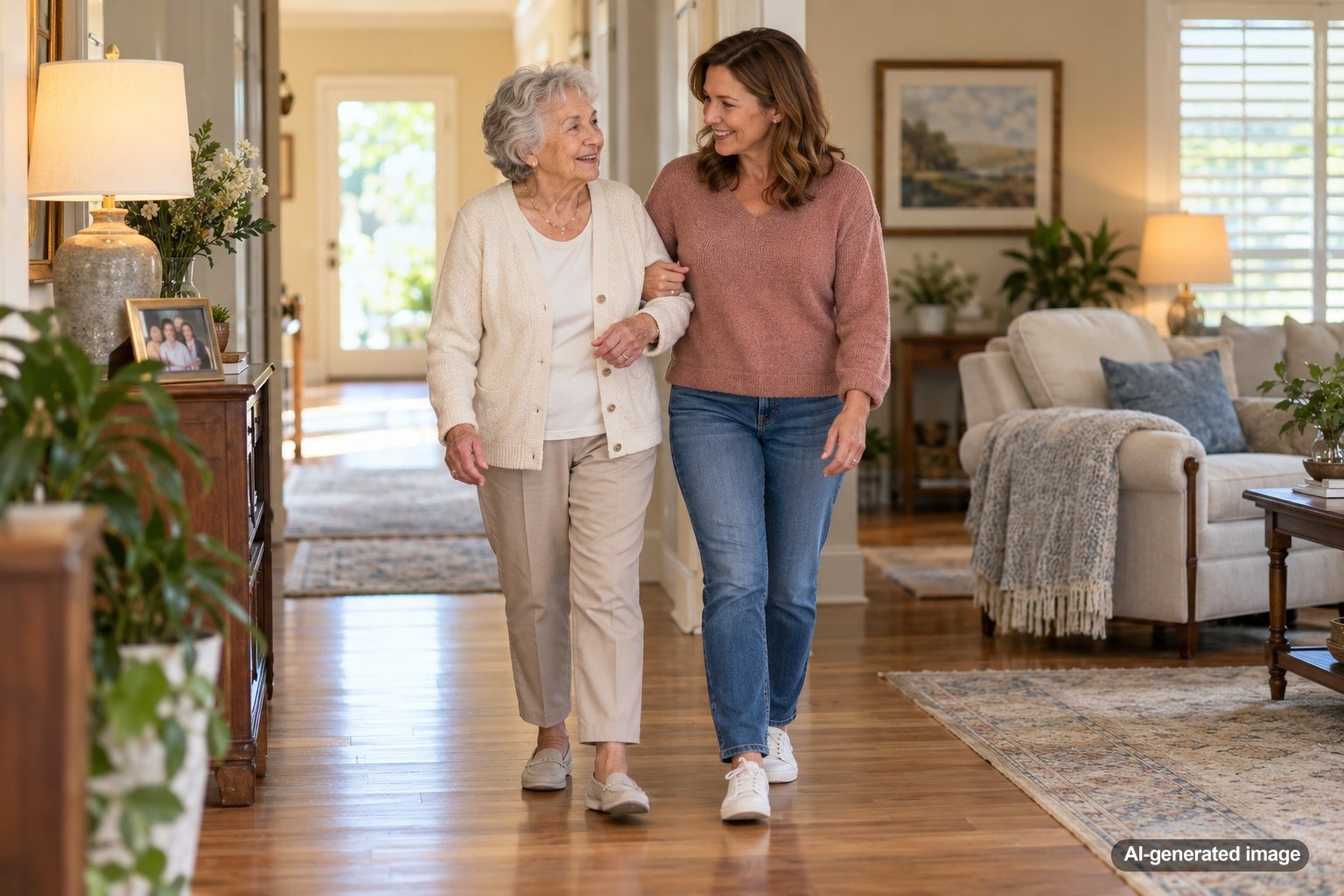
When an older adult loses a spouse, the change reaches far beyond the absence of one person. Daily conversations, shared meals, errands, social plans, household responsibilities, and familiar routines may all change at once. Families should know that social isolation can develop gradually after this kind of loss, even when a loved one has relatives who care deeply about them.
The goal is not to pressure someone to “move on” or fill every quiet moment. Grief deserves patience and respect. A more helpful approach is to notice whether opportunities for connection, activity, and meaningful routine are becoming increasingly limited, then offer support that protects dignity and personal choice.
Quick answer
- Losing a spouse can remove a person’s most frequent source of conversation, companionship, transportation, shared routines, and social connection.
- Families can watch for shrinking routines, fewer social contacts, skipped activities, difficulty managing everyday tasks, or a growing reluctance to leave home.
- Support works best when it respects grief and independence rather than forcing social activity.
- Regular family contact, companionship, practical help, transportation, familiar activities, and a more structured daily routine may help an older adult stay connected.
- If emotional, physical, cognitive, or functional changes are concerning, a qualified professional can help the family understand what kind of support may be appropriate.
Why social isolation can increase after a spouse dies
A spouse is often woven into nearly every part of daily life. Couples may eat together, attend appointments together, visit friends together, divide household tasks, share transportation, and provide one another with company throughout the day. When one spouse dies, the surviving partner may suddenly have much less everyday interaction without intentionally choosing isolation.
Social circles may also change. Some friendships may have centered on couples. Transportation may become more difficult if the spouse handled most of the driving. Activities that once felt enjoyable may now feel emotionally difficult because they are strongly associated with the person who died.
Families may therefore need to think beyond the question, “Does Mom or Dad have people who care?” A more useful question is, “What does an ordinary week actually look like now?” Someone can have a loving family and still spend long stretches of time alone.
Signs or situations families may want to notice
No single behavior proves that an older adult is socially isolated. People grieve differently, and many need more quiet time after a major loss. Families can instead look for patterns and changes over time.
- A much smaller weekly routine: Activities, errands, meals out, religious services, clubs, hobbies, or visits that used to be regular may gradually disappear.
- Less communication: Phone calls, texts, visits, or conversations with friends and relatives may become less frequent.
- Difficulty leaving home: Transportation, mobility, confidence, or the absence of a spouse who previously accompanied them may make outings harder.
- Meals becoming increasingly solitary: Someone who spent decades eating with a spouse may find mealtimes especially quiet or difficult.
- Household routines becoming harder to manage: The spouse who died may have handled shopping, cooking, appointments, paperwork, transportation, or other routines.
- Loss of confidence: A person may hesitate to attend events alone, try unfamiliar transportation, or manage activities that were previously shared.
- Family members becoming the only regular contact: Loving family involvement is valuable, but one or two relatives may not be able to replace the broader rhythm of connection that existed before.
How families can approach the conversation
Conversations about loneliness or additional help can feel sensitive. An older adult may worry that accepting support means losing control, becoming dependent, or being treated differently. Starting with curiosity rather than conclusions can make the discussion easier.
Instead of saying, “You are too isolated,” a family member might ask how the week has been feeling, which parts of the day are hardest, what activities are missed, or whether there are routines the person would like help restarting. This keeps the conversation focused on the older adult’s experience rather than the family’s assumptions.
It can also help to separate companionship from supervision. Spending time with another person does not have to mean someone is incapable of living independently. Companionship may simply create more conversation, shared activity, transportation options, meal support, or structure during a major life transition.
Practical ways families can support connection
Support does not need to begin with a dramatic change. Small, dependable routines are often easier to accept and sustain.
Create predictable points of contact
Instead of relying only on spontaneous calls, families can establish familiar rhythms such as a morning phone call, a weekly dinner, a regular grocery trip, or a standing weekend visit. Predictability can give both the older adult and the family something concrete to expect.
Help maintain familiar activities
If someone stopped attending a favorite activity because the spouse used to drive, accompany them, or organize the outing, the obstacle may be practical rather than a lack of interest. Transportation help or companionship may make participation easier.
Make meals more social when possible
Shared meals can provide conversation and structure. Families might rotate visits, invite a loved one for dinner, arrange occasional meals with friends, or consider companion support when family members live far away or have limited availability.
Support independence with everyday routines
The death of a spouse can reveal how much each partner handled behind the scenes. An older adult may need help learning or reorganizing tasks such as shopping, scheduling, transportation, meal preparation, or household routines. Providing practical help can make it easier to continue living at home with confidence.
Respect the person’s preferred pace
More activity is not automatically better. Some people value a quiet lifestyle, and grief can make large gatherings or unfamiliar situations exhausting. Families can offer choices rather than filling the calendar without input.
How support at home may fit into the bigger picture
For some families, the need is not simply someone to complete household tasks. A more useful plan may combine companionship, practical assistance, mobility awareness, safer routines, family communication, and support that adapts as needs change.
Companion or home care support may help create regular social contact, make everyday routines easier, provide assistance with outings, or reduce pressure on relatives who are trying to cover every need themselves. When mobility or daily activities are becoming more difficult, a professional evaluation may also help clarify whether additional support or therapy should be considered.
This broader aging-at-home approach can focus on maintaining routines, comfort, dignity, and meaningful participation in daily life. Families can learn more about Mind & Mobility and the types of aging-in-place support available across its service areas.
When to involve a professional
Families do not have to interpret every change on their own. It may be time to ask for guidance when social withdrawal is accompanied by noticeable changes in mobility, daily function, communication, memory, eating routines, personal care, or the ability to manage everyday responsibilities.
A qualified healthcare professional can evaluate health-related concerns. Families who are primarily trying to understand home support, companionship, daily routines, or aging-in-place options can also speak with a care provider about what level of assistance may fit the situation.
If a loved one expresses thoughts of self-harm, appears to be in immediate danger, or has another urgent health or safety concern, seek immediate professional or emergency assistance.
Frequently asked questions
Is wanting to spend time alone after a spouse dies unusual?
No. Many people want more privacy and quiet while grieving. Families can focus less on the amount of time spent alone and more on whether the person still has meaningful choices, supportive relationships, workable routines, and opportunities for connection when they want them.
How can adult children help when they live far away?
Regular calls, video conversations when comfortable, coordinated visits, help arranging transportation, communication with nearby relatives or friends, and reliable local companionship can all contribute to a stronger support network. Consistency is often more useful than occasional bursts of attention.
Should families encourage a widowed parent to become more social?
Families can offer opportunities without applying pressure. Ask which activities, people, or routines the person actually misses and start there. Respecting personal preferences can make support feel collaborative rather than controlling.
Can companion care help with social isolation?
Companion care may provide regular conversation, shared activities, help with outings, meal companionship, and more structure in the week. Whether it is appropriate depends on the person’s preferences, daily routines, and overall support needs.
What if the surviving spouse refuses help?
Resistance does not always mean the conversation is over. Families may have better results by starting with a specific concern or practical need rather than proposing a major change. Offering limited choices, trying a small amount of support, and emphasizing independence can make the idea feel less threatening.
Need help supporting a loved one at home?
Mind & Mobility helps families explore care, therapy, mobility support, and aging-in-place options with dignity and compassion.
Prefer to call? 866-595-7086
Disclaimer
This article is for educational purposes only and is not medical, legal, insurance, or emergency advice. For personalized guidance, speak with a qualified healthcare professional or contact Mind & Mobility to discuss care options.