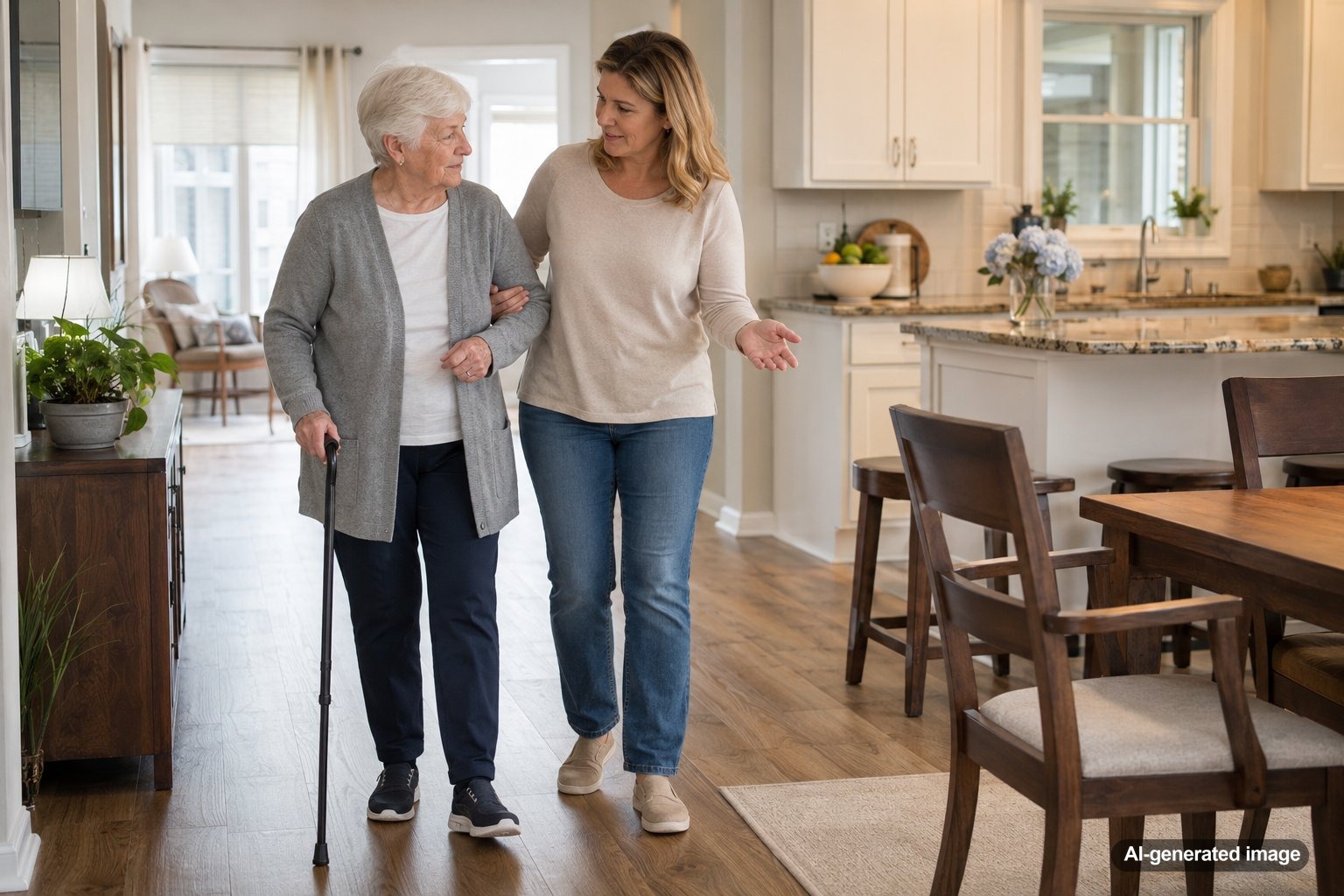
Families often look for the obvious hazards first: a loose rug, a dark hallway, or a slippery bathroom floor. Those risks matter, but many indoor fall risks are quieter. They build up slowly as routines change, furniture gets rearranged, vision shifts, balance becomes less steady, or a loved one starts avoiding certain rooms without saying why.
Noticing these risks is not about taking over the home or making someone feel fragile. It is about helping the home continue to support confidence, comfort, and independence. A few thoughtful changes, paired with the right guidance when needed, may reduce risk and make daily movement feel easier.
Quick answer
- Common indoor fall risks include cluttered walking paths, loose rugs, poor lighting, slippery bathroom surfaces, unstable furniture, cords, thresholds, and rushed routines.
- Families often miss risks that seem normal because they have been part of the home for years.
- Changes in vision, balance, strength, medications, or confidence can make familiar spaces harder to navigate.
- Simple updates may help, but recurring falls, near-falls, or growing fear of walking should be discussed with a qualified professional.
Why this matters for families
A fall risk is not always dramatic. It may be the narrow path between a favorite chair and the bathroom, the towel bar being used like a grab bar, or the small pet bed that shifts underfoot. Families may not notice these details during short visits because their loved one has learned to move around them carefully.
The challenge is that aging-in-place safety depends on both the environment and the person using it. A home that felt easy to move through five years ago may now require more strength, balance, lighting, or support than it used to. When families view the home through that lens, safety conversations can feel less like criticism and more like teamwork.
Signs or situations to watch for
One helpful way to spot hidden fall risks is to watch how daily routines actually happen. Pay attention to what your loved one reaches for, avoids, steps over, or rushes through.
- Furniture used for support: Leaning on chairs, counters, towel bars, or door frames may signal that walking paths or transfers feel less steady.
- Rooms that are being avoided: If a loved one stops using a shower, basement, porch, or laundry area, the space may feel difficult or unsafe.
- Clutter that gathers in pathways: Shoes, baskets, pet items, magazines, and delivery boxes can become tripping hazards, especially in narrow areas.
- Lighting gaps: Dim hallways, burned-out bulbs, glare, and hard-to-reach switches can make familiar spaces harder to judge.
- Loose or uneven surfaces: Rugs, curled mats, thresholds, extension cords, and uneven flooring can catch a foot or mobility device.
- Bathroom shortcuts: Skipping bathing, rushing to the toilet, or using towel bars for balance may point to a need for safer bathroom support.
- Changing footwear habits: Slippers without support, socks on smooth floors, or shoes left far from the bed can increase risk during daily movement.
- Rushing during transitions: Getting up quickly from bed, hurrying to answer the door, or moving fast at night can create avoidable hazards.
How families can approach the conversation
Fall risk can be a sensitive topic because many older adults hear it as a warning that they are losing control. A softer approach usually works better than pointing out everything that looks wrong.
Try starting with comfort and convenience rather than fear. For example, you might say, “I noticed the hallway is a little dark at night. Would it help if we made that easier to see?” or “Could we try moving this basket so the walkway feels more open?” Small, specific suggestions are often easier to accept than a broad statement like, “This house is unsafe.”
It can also help to ask permission before making changes. A loved one may be more open when the goal is preserving independence, not taking away familiar routines. Families can frame updates as a way to keep the home working well for the person who lives there.
Practical ways support at home may help
Support at home can be part of a broader care plan when everyday tasks, movement, or routines are becoming more challenging. Depending on a loved one’s needs, practical support may include help with clear pathways, safer routines, bathing assistance, mobility support, transfer support, and noticing patterns that family members may not see during short visits.
Families can also look at simple home adjustments that may make movement easier:
- Improve lighting near stairs, hallways, bathrooms, bedrooms, and entryways.
- Keep frequently used items within easy reach so climbing, bending, or stretching is less necessary.
- Remove or secure loose rugs and mats where appropriate.
- Keep cords, pet supplies, and small furniture out of walking paths.
- Consider whether grab bars, non-slip bathroom surfaces, or a shower chair may be worth discussing with a qualified professional.
- Encourage properly fitting footwear with stable soles inside the home.
- Make nighttime movement easier with clear paths and accessible lighting.
Mind & Mobility helps families think through care, therapy, mobility support, and aging-in-place needs in a dignity-first way. Families can learn more through the Mind & Mobility Home page or reach out through the contact page when they are ready to talk through options.
When to involve a professional
It may be time to ask for guidance when a loved one has had a fall, has frequent near-falls, seems increasingly unsteady, avoids stairs or bathing, has trouble getting up from a chair, or expresses fear about walking inside the home. A professional can evaluate needs, discuss safer routines, and help families understand what kind of support may fit the situation.
Families should also seek timely medical guidance if a fall causes injury, pain, head impact, sudden confusion, severe weakness, chest pain, stroke warning signs, severe shortness of breath, or any immediate danger. Home support does not replace emergency care, a physician’s guidance, or a licensed medical evaluation.
FAQ
What is the most commonly missed fall risk inside the home?
Many families miss risks that feel familiar, such as a favorite rug, a dim hallway, an uneven threshold, or furniture used for balance. Familiar does not always mean easy to navigate as mobility, strength, vision, or confidence changes.
Should families remove every rug from an older adult’s home?
Not necessarily. Some rugs may need to be removed, secured, or replaced, depending on the surface, location, and the person’s mobility. If you are unsure, it is worth discussing the home setup with a qualified professional.
How can I bring up fall risk without upsetting my parent or spouse?
Lead with respect and practicality. Focus on making daily life easier, not on blaming the person or criticizing the home. Ask permission before changing things and start with one or two small updates.
Can home care help with fall risk?
Home care may help by supporting daily routines, personal care, safe movement, and household organization, depending on the person’s needs. It should be viewed as part of a broader plan, not a guarantee of safety.
When should a family consider therapy or mobility support?
If walking, balance, transfers, stairs, or daily movement are becoming harder, a professional evaluation may be helpful. Physical therapy or occupational therapy may support strength, balance, movement strategies, and safer ways to complete everyday activities.
Need help supporting a loved one at home?
Mind & Mobility helps families explore care, therapy, mobility support, and aging-in-place options with dignity and compassion.
Prefer to call? 866-595-7086
Disclaimer
This article is for educational purposes only and is not medical, legal, insurance, or emergency advice. For personalized guidance, speak with a qualified healthcare professional or contact Mind & Mobility to discuss care options.