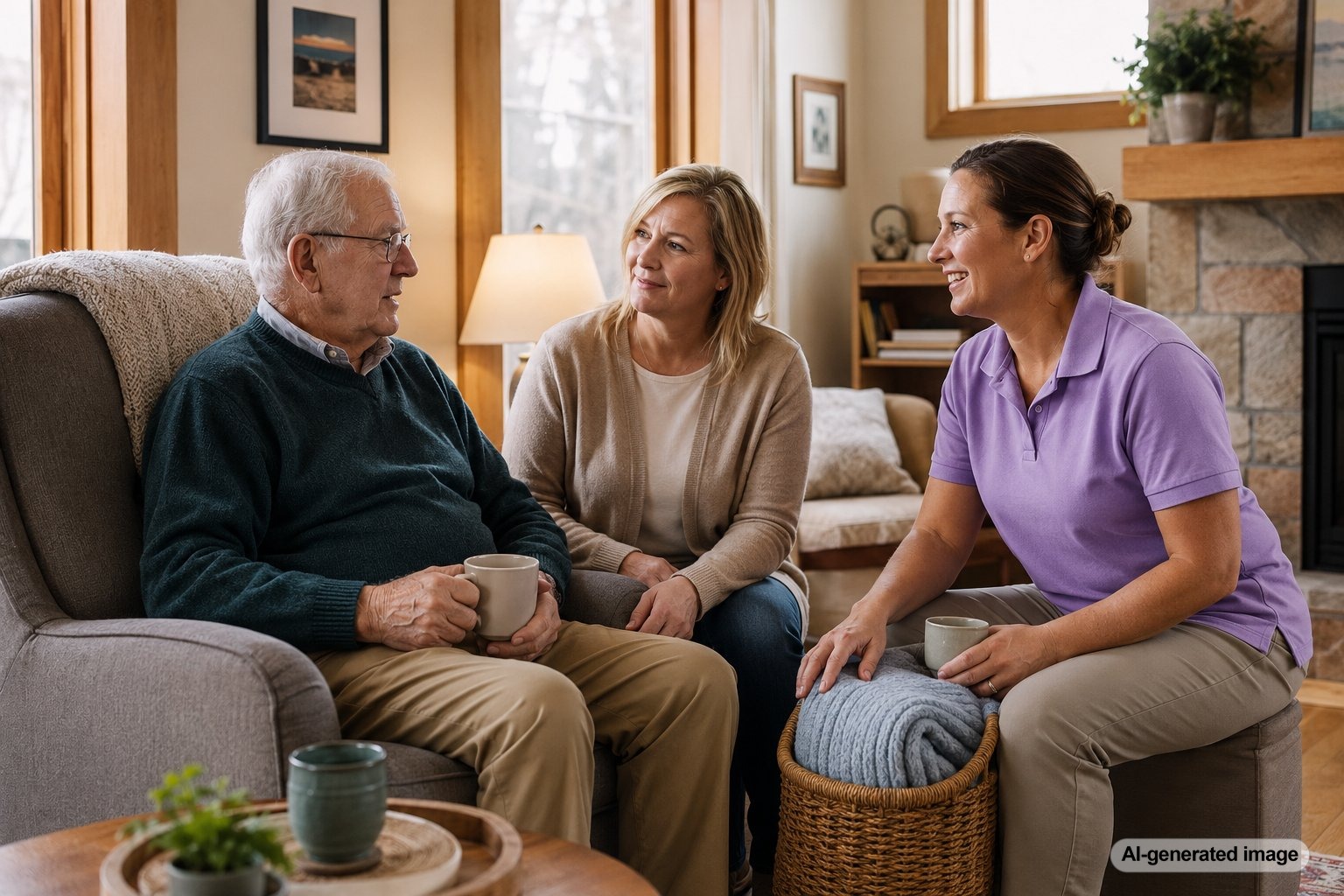
Home Harmony is different from housekeeping because it is not just about making a home look clean. It is about helping an older adult live more comfortably, safely, and confidently in the space they already know.
Housekeeping usually focuses on chores such as tidying, laundry, dishes, and light cleaning. Home Harmony looks at how the home supports daily life: whether commonly used items are easy to reach, whether routines feel manageable, whether the environment feels calm, and whether family members have a clearer sense of what is happening at home.
Quick answer
- Housekeeping focuses mainly on cleaning and household tasks.
- Home Harmony focuses on daily comfort, safer routines, organization, and support that fits how an older adult actually lives.
- Housekeeping may make the home neater; Home Harmony may help the home function better for aging in place.
- Home Harmony can include light household support, but the goal is broader than a clean room or completed chore list.
- For families, the difference is often peace of mind: the home is not only cleaner, but easier to navigate and live in.
Why this matters for families
Many families start by asking for help with housekeeping because the visible signs are easy to notice: dishes stacking up, laundry going unfinished, mail piling on the counter, or clutter building in walkways. Those signs matter, but they may also point to something bigger than a cleaning problem.
An older adult may be having trouble bending, reaching, carrying laundry, organizing medications and appointments, remembering the next step in a routine, or keeping up with the small daily tasks that make home feel manageable. Home Harmony gives families a more practical way to think about the situation. Instead of asking only, “Who can clean this?” the family can ask, “What would make daily life at home easier, calmer, and more supportive?”
How Home Harmony and housekeeping compare
| Area | Housekeeping | Home Harmony |
|---|---|---|
| Main focus | Cleaning and tidying. | Comfort, routines, organization, safety awareness, and dignity at home. |
| Typical tasks | Laundry, dishes, sweeping, dusting, and light household chores. | Supporting household flow, reducing everyday friction, noticing routine challenges, and helping the home feel more manageable. |
| Family benefit | A cleaner home. | A clearer picture of how the home is functioning for the person living there. |
| Best fit | When the main need is routine household cleaning. | When the goal is to support aging in place with more comfort, confidence, and family communication. |
Signs or situations to watch for
Home Harmony may be worth discussing when ordinary home tasks are becoming stressful, inconsistent, or quietly overwhelming. Families may notice changes slowly, especially when a loved one is proud, private, or hesitant to accept help.
- Frequently used items are stored in hard-to-reach places.
- Clutter is appearing in walking paths, near the bed, or around favorite chairs.
- Laundry, dishes, mail, or trash are becoming harder to manage.
- The home looks clean in some rooms but disorganized in areas used every day.
- A loved one avoids certain tasks because they feel tiring, frustrating, or unsafe.
- Family members are doing more last-minute problem-solving instead of feeling ahead of the situation.
These signs do not automatically mean a person needs a specific service. They simply suggest that the home may need more thoughtful support than a standard cleaning visit can provide.
How families can approach the conversation
The word “housekeeping” can feel easier to bring up because it sounds practical and familiar. Home Harmony may need a softer explanation, especially if an older adult worries that accepting help means losing control.
A helpful approach is to focus on comfort and choice. For example, a family member might say, “I know you want to stay comfortable at home. Could we look at what parts of the house are starting to feel like more work than they used to?” This keeps the conversation centered on independence rather than criticism.
It can also help to start small. Instead of presenting a major plan, families can discuss one daily frustration: the laundry area is difficult to use, the kitchen counters are crowded, or the bathroom supplies are hard to reach. Small improvements can build trust and make support feel less intrusive.
Practical ways support at home may help
Home Harmony can be part of a broader aging-in-place plan. Depending on the family’s needs, support may include light household help, routine organization, companionship, mobility awareness, and communication with family members about what seems to be changing at home.
Examples may include helping keep commonly used items within easier reach, supporting a more predictable morning or evening routine, helping reduce clutter in high-use areas, encouraging safer household flow, or noticing when a task that used to be simple is becoming difficult. The goal is not to take over the home. The goal is to help the home keep working for the person who lives there.
This is also where coordinated support can matter. A caregiver may notice that a loved one is struggling with transfers, walking confidence, bathing setup, or dressing routines. When appropriate, a qualified professional can evaluate whether Physical Therapy, Occupational Therapy, or another service may be useful. In plain English, PT often focuses on walking, balance, strength, mobility, and movement confidence. OT often focuses on daily activities, home setup, adaptive strategies, and routines such as dressing, bathing, eating, and managing everyday tasks. Speech Therapy may be involved when communication, cognition, speech, or safe swallowing support is clinically appropriate.
When to involve a professional
Families may want guidance when the home feels harder to manage, when small issues keep repeating, or when family caregivers are stretched thin. It may also be time to ask for help if an older adult is avoiding daily tasks, becoming more isolated, or feeling embarrassed by changes at home.
A professional conversation does not have to mean making a major decision right away. It can simply help the family understand what kind of support fits the situation: companion care, personal care, respite care, therapy-informed mobility support, home safety awareness, or a combination that adapts as needs change.
If there has been a fall with injury, sudden confusion, chest pain, stroke warning signs, severe shortness of breath, severe weakness, or immediate danger, call emergency services or a qualified healthcare professional right away.
FAQ
Is Home Harmony the same as cleaning?
No. Cleaning may be one part of it, but Home Harmony is broader. It looks at how the home supports daily comfort, organization, routines, dignity, and aging in place.
Can Home Harmony include light housekeeping?
Yes, when appropriate. Light household tasks may be included as part of helping the home feel more manageable, but the purpose is not simply to complete chores.
Is this only for someone who is very frail?
No. Many families explore home support before a situation becomes urgent. A little help with routines and household flow may make daily life easier while preserving independence.
How do I explain this to a parent who does not want help?
Focus on comfort, choice, and staying in control at home. Avoid framing the conversation as a list of problems. Start with one practical improvement that would make the day easier.
Does Home Harmony replace therapy or medical care?
No. Home support can work alongside broader care planning, but it does not replace medical advice, emergency care, or evaluation by a qualified professional when specific health or mobility concerns are present.
Need help supporting a loved one at home?
Mind & Mobility helps families explore care, therapy, mobility support, and aging-in-place options with dignity and compassion.
Prefer to call? 866-595-7086
Disclaimer
This article is for educational purposes only and is not medical, legal, insurance, or emergency advice. For personalized guidance, speak with a qualified healthcare professional or contact Mind & Mobility to discuss care options.