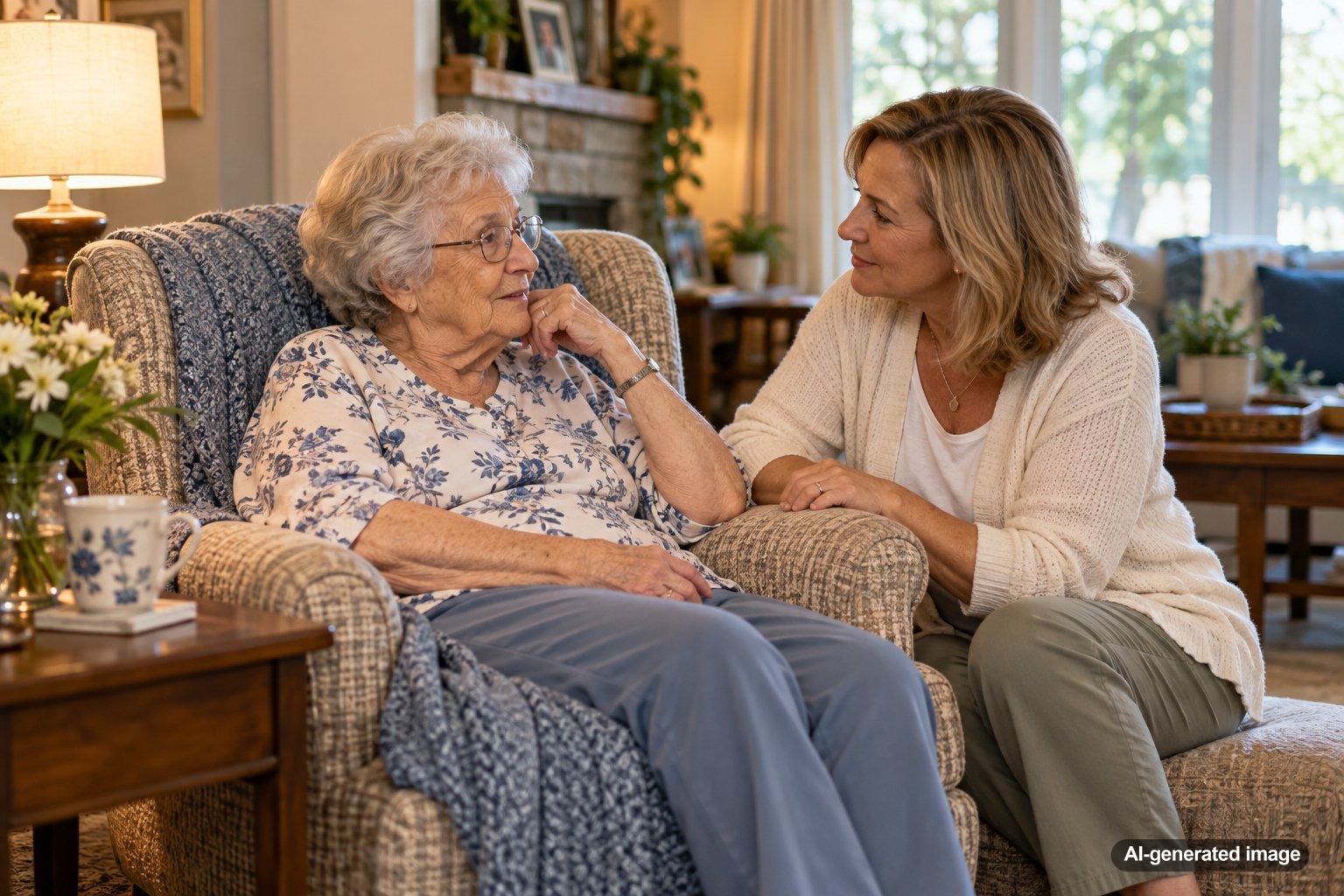
Family visits often have a familiar rhythm. Someone makes coffee, another person walks into the kitchen, and relatives move between the living room, dining table, and front porch. But you may begin noticing that an older parent or loved one remains in exactly the same chair throughout the entire visit, even when everyone else changes rooms.
There are many possible explanations. Your loved one may simply feel comfortable in a favorite spot, or getting up may require more effort than it once did. They might be conserving energy, worrying about their balance, or avoiding the discomfort of standing. The important thing is not to interpret one quiet afternoon as proof of a serious problem. Instead, consider whether remaining seated reflects a preference, a change in confidence, or a new difficulty with everyday movement.
Quick answer
- Comfort and habit: A familiar chair may offer the best view, support, or sense of belonging during a family gathering.
- Physical effort: Standing, walking, and changing positions may feel more tiring or uncomfortable than before.
- Movement confidence: An older adult may hesitate to get up because they feel unsteady or worry about needing assistance.
- Social considerations: Someone may prefer staying seated rather than interrupting conversation or drawing attention to a physical limitation.
- Changing routines: If sitting through visits is a new pattern, it may be worth discussing with your loved one and, when appropriate, a healthcare professional.
Why staying in one chair can be more complicated than it looks
When relatives arrive, a living room chair can become the center of the gathering. Everyone approaches to say hello, conversations happen within hearing distance, and the older adult may have little reason to move. If the person is engaged, comfortable, and behaving as usual, remaining seated may be an ordinary personal choice.
However, family gatherings can also reveal changes that are less obvious during a quick phone call. Standing from a low chair requires strength, balance, and coordination. Walking through a crowded room may mean navigating furniture, pets, or people. Even a short trip to the kitchen can feel like an interruption when someone is tired or concerned about moving comfortably.
Some older adults also work hard to avoid becoming the focus of attention. Rather than asking someone to move a chair or provide a steady arm, they may choose to remain where they are. This is not necessarily stubbornness. It may be an attempt to preserve privacy, independence, or control over the visit.
Possible reasons an older adult stays seated throughout a visit
The chair feels familiar and supportive
A favorite recliner or armchair may have the right seat height, firm armrests, and comfortable cushions. Other seating around the home may feel less supportive. If the entire family comes to them, your loved one may simply see no reason to change locations.
Getting up has become more difficult
Moving from sitting to standing involves more than leg strength. It also requires shifting weight, maintaining balance, and coordinating movements. An older adult who finds this transition challenging may limit how often they stand, particularly when other people are watching.
They are trying to manage fatigue or discomfort
Family gatherings can be enjoyable and exhausting at the same time. A busy room, extended conversation, and changes to a familiar schedule may leave someone feeling tired. Joint discomfort, stiffness, or other physical concerns can also make frequent position changes less appealing. Persistent or worsening discomfort deserves professional attention rather than assumptions about normal aging.
They feel uncertain about walking in front of others
Someone who feels less steady may become particularly cautious when children, pets, or extra furniture make pathways less predictable. Remaining in one place may seem simpler than asking everyone to move aside.
They prefer to participate without moving around
Not everyone enjoys circulating at a gathering. Some people have always preferred sitting in one spot and letting conversations come to them. Personality and lifelong habits matter. The most useful comparison is often between your loved one’s current behavior and what is typical for them, rather than what other family members expect.
What families can notice without making the visit feel like an assessment
You do not need to turn a family get-together into a test of someone’s mobility. Ordinary observations may provide useful context, especially when you notice a new pattern over several visits.
- How they get into and out of the chair: Do they appear comfortable standing, or do they repeatedly attempt to rise before succeeding?
- Whether they avoid ordinary activities: Have they stopped walking to the table, greeting guests at the door, or joining activities they previously enjoyed?
- How the room is arranged: Are there narrow pathways, loose rugs, awkward furniture positions, or chairs that are difficult to use?
- What they say about their energy: Do they describe feeling unusually tired, stiff, uncomfortable, or uncertain on their feet?
- Whether they remain socially engaged: Are they enjoying the gathering from their chair, or do they seem withdrawn or frustrated by being unable to participate as they wish?
Any one observation may have a simple explanation. A noticeable change from the person’s usual abilities, especially one that affects daily routines, is a better reason to explore what is happening.
How to start a conversation without making your loved one defensive
Comments such as ‘You never get out of that chair anymore’ can sound critical, even when they come from concern. Your loved one may hear an accusation of laziness, weakness, or lost independence.
A more supportive approach is to ask about comfort and preferences. You might say, ‘I noticed you seemed happiest staying here today. Is this chair more comfortable than the others?’ Or, ‘Would anything make it easier for you to join us at the table?’
Ask privately when possible, rather than raising the issue in front of guests. Listen before suggesting changes. An older adult may explain that the dining chairs hurt their back, they dislike the noise in another room, or they would appreciate help moving through a crowded hallway.
If your loved one does not want to discuss it, avoid pressing for an immediate answer. A respectful conversation can continue another day. Preserving trust matters more than obtaining a complete explanation during one visit.
Practical ways to make family visits more comfortable and inclusive
Families can make small adjustments without treating an older loved one as a passive participant.
- Bring activities within comfortable reach. If your loved one enjoys conversation from a favorite chair, arrange the gathering so they can participate without feeling excluded.
- Offer seating choices. Ask whether a different chair, location, or room would feel more comfortable. Avoid rearranging their environment without permission.
- Keep pathways manageable. Move temporary clutter, bags, and extra furniture away from common walking routes.
- Invite rather than insist. A simple ‘Would you like to join us outside?’ gives someone the opportunity to participate or decline.
- Allow unhurried transitions. If your loved one chooses to stand or walk, avoid rushing them or pulling them up unexpectedly.
- Balance activity with rest. Shorter gatherings, quieter conversation, and opportunities to take breaks may be more enjoyable than an exhausting afternoon.
These adjustments are not meant to pressure someone into moving more during every visit. Their purpose is to make participation easier and allow the older adult to choose how they spend time with family.
How coordinated support at home may help
If remaining seated reflects a broader change in daily function, families may benefit from considering the routines surrounding it. Is your loved one comfortable moving between rooms when guests are not there? Can they participate in meals, hobbies, and everyday activities in ways that feel manageable? Are family members unsure how much assistance to offer?
Home care and companionship may support daily routines, social engagement, and practical assistance based on individual preferences. Rather than focusing only on whether someone can stand up, a broader aging-in-place plan considers their comfort, independence, environment, and desired activities.
When specific movement concerns arise, a physical therapist may evaluate walking, balance, strength, transfers, and confidence with movement. An occupational therapist may assess everyday activities, seating arrangements, home setup, and strategies for managing routines. These professionals have different roles, and the appropriate approach depends on an individual evaluation.
Mind & Mobility encourages families to think about home support as a coordinated process involving routines, mobility awareness, companionship, family communication, and changing needs. You can learn more about the organization’s approach through the Mind & Mobility website.
When to involve a healthcare professional
It may be time to seek professional guidance when an older adult’s reluctance to stand or move is new, persistent, or noticeably affecting their everyday life. Repeated difficulty rising from chairs, increased unsteadiness, unexplained pain, marked fatigue, or a decline in usual activities should not automatically be dismissed as aging.
A qualified healthcare professional can evaluate possible contributing factors and determine whether further assessment or therapy may be appropriate. Sudden weakness, new confusion, stroke warning signs, chest pain, or other severe symptoms require immediate medical attention through emergency services.
Families do not have to wait until every activity becomes difficult to have a thoughtful conversation about support. Earlier discussions may make it easier to understand preferences, identify practical barriers, and consider appropriate next steps together.
Frequently asked questions
Is it normal for an older adult to sit in the same chair for hours?
It can be a normal preference, especially if the person is comfortable, engaged, and able to move as usual when they choose. A new pattern of avoiding movement, particularly alongside discomfort or difficulty standing, deserves closer attention.
Why does my older parent get up when alone but not during family visits?
They may feel more comfortable moving at their own pace without an audience. Crowded rooms, unfamiliar arrangements, fatigue, or concern about needing help may also play a role. Ask about their experience rather than assuming one explanation.
Should I encourage my loved one to walk around during a family gathering?
It is reasonable to offer opportunities to change locations or participate in activities, but avoid pressuring someone to walk or stand when they feel uncomfortable or unsteady. If movement has become difficult, a professional evaluation may help clarify appropriate support.
Could staying seated mean my loved one is losing mobility?
It could be one clue, but staying seated alone does not establish mobility decline. Consider whether the person has also changed how they handle ordinary activities, such as getting out of bed, moving between rooms, or joining meals.
How can I help without making my parent feel dependent?
Ask what would make gatherings more enjoyable and offer choices instead of automatically taking over. Respecting their preferences, keeping pathways comfortable, and involving them in decisions can help preserve their sense of control.
Can home support help if my loved one avoids moving around the house?
Depending on their needs, companionship, practical help with routines, appropriate mobility support, and family-centered planning may make daily life more manageable. A healthcare professional can assess specific physical concerns, while home support can complement an individualized plan.
Need help supporting a loved one at home?
Mind & Mobility helps families explore care, therapy, mobility support, and aging-in-place options with dignity and compassion.
Prefer to call? 866-595-7086
Disclaimer
This article is for educational purposes only and is not medical, legal, insurance, or emergency advice. For personalized guidance, speak with a qualified healthcare professional or contact Mind & Mobility to discuss care options.