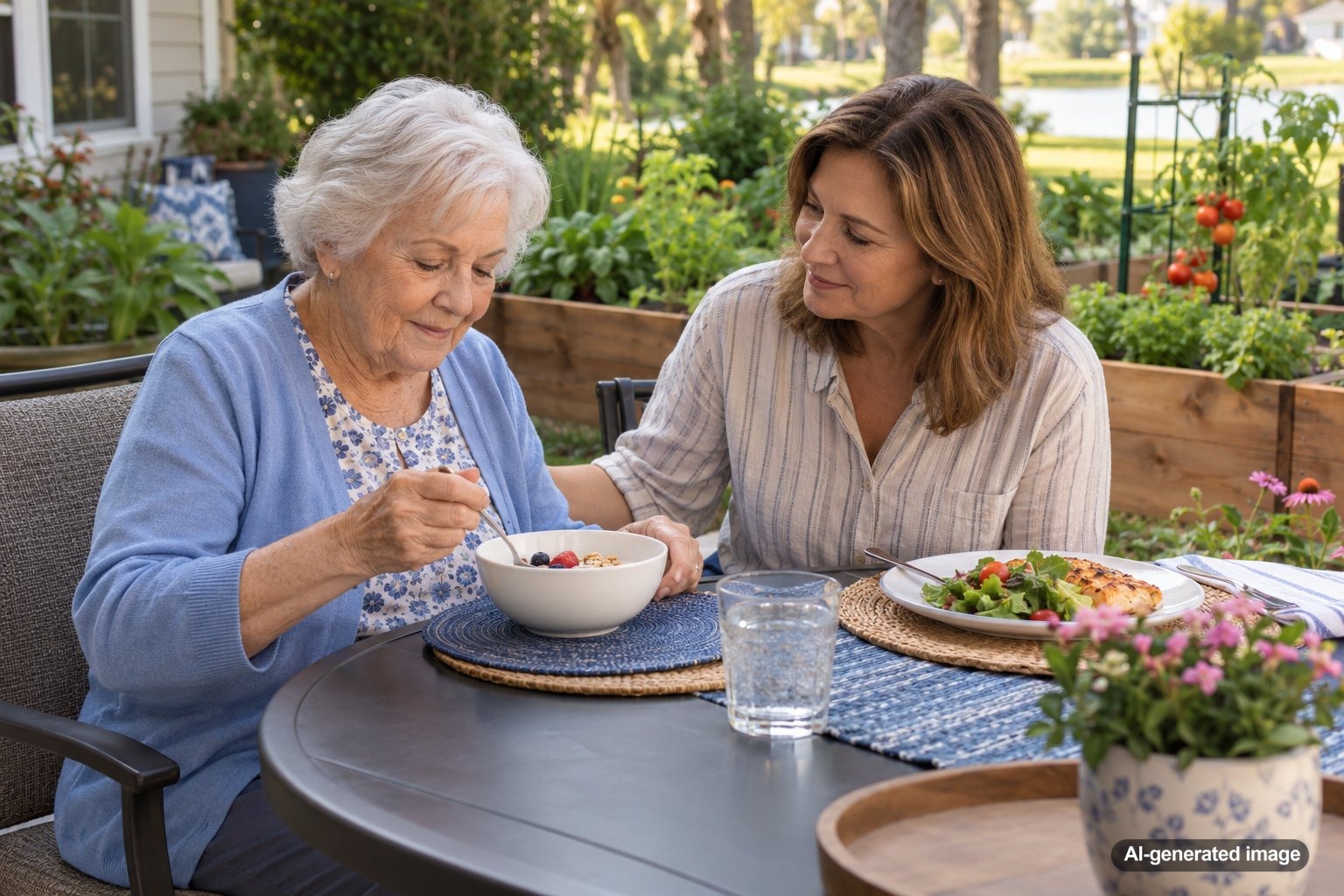
Something as ordinary as a plate sliding across the table can turn a peaceful meal into a frustrating experience for an older adult. A bowl that moves while someone tries to scoop soup, a lightweight plate that shifts with every fork movement, or a dish that requires one hand to hold it steady can make eating more tiring than it needs to be. These small difficulties may be especially noticeable when someone has less hand strength, reduced coordination, or trouble using both hands comfortably.
Families sometimes focus on what their loved one eats without noticing how the dishes themselves affect the experience. Fortunately, a few thoughtful changes to dinnerware and table setup can make meals feel more manageable while preserving the person’s preferences, dignity, and independence.
Quick answer
- Plates and bowls that slide can make scooping, cutting, and transferring food more difficult.
- Non-slip placemats, stable dishes, and appropriately sized utensils may make eating easier.
- Table height, chair positioning, and comfortable arm support can affect how well someone manages a meal.
- Families should ask which changes feel helpful rather than automatically replacing familiar dishes.
- An occupational therapist can evaluate persistent difficulties with everyday eating activities and suggest individualized adaptations.
Why Slippery Dinnerware Can Become a Daily Frustration
Eating involves more coordination than many people realize. One hand may hold a fork while the other steadies a plate. Cutting food requires controlled pressure, while scooping from a bowl involves keeping the container still as the utensil moves against it.
When a dish slides, the person must compensate by gripping harder, changing their movements, or repeatedly repositioning the plate. Someone who previously enjoyed eating independently may begin asking for assistance simply because the dinnerware no longer stays where it belongs.
A lightweight bowl on a polished tabletop may move easily. A plate with a very smooth bottom can shift on certain placemats. Even a favorite ceramic dish can become difficult to manage if its shape, weight, or position requires uncomfortable movements.
These challenges do not necessarily mean someone can no longer feed themselves. Sometimes the environment is making an ordinary task unnecessarily complicated.
Why Small Mealtime Difficulties Matter to Families
Shared meals offer more than nourishment. They provide routine, conversation, enjoyment, and opportunities for older adults to participate in family life. When dinnerware becomes difficult to handle, mealtimes may become associated with frustration or embarrassment instead.
Some older adults quietly adjust their habits. They might stop serving foods that require cutting, use their fingers more frequently, or choose a particular bowl because it is easier to manage. Others may become frustrated when a family member repeatedly reaches over to steady their plate.
Family members may interpret these changes as stubbornness or declining interest in food. Yet the underlying issue could be as simple as an unstable dish or uncomfortable seating arrangement.
Noticing these details helps families support independence without taking over the entire meal. The goal is to make the activity easier while allowing the older person to maintain as much control as possible.
Signs That Plates and Bowls May Be Causing Problems
Families can learn a great deal by observing familiar meals without turning the experience into a test. Look for patterns that suggest the table setup is creating unnecessary work.
- Repeatedly chasing food: The plate moves whenever the person tries to scoop or cut something.
- Holding dishes with unusual force: One hand stays firmly pressed against a bowl throughout the meal.
- Frequent repositioning: The person continually pulls the dish closer or turns it to reach the food.
- Avoiding particular foods: Meals requiring cutting or careful scooping become less appealing.
- Increased spills: Food slips over the edge when the container unexpectedly moves.
- Visible frustration: The person sighs, pauses frequently, or asks someone else to finish a task they previously handled independently.
These observations are starting points for a conversation, not evidence of a particular medical condition. Difficulty with eating may involve the utensils, seating, vision, hand comfort, or other factors in addition to dinnerware.
Simple Dinnerware Changes That May Help
Start With a Non-Slip Surface
A non-slip placemat or food-safe gripping mat can provide traction beneath a plate or bowl. This may reduce unwanted movement without requiring the person to learn how to use unfamiliar equipment.
Choose a material that lies flat, is easy to clean, and does not curl at the edges. Check that it grips both the table and the dish. A mat that slides along with the plate does little to solve the original problem.
Consider Heavier or Wider-Based Dishes
Some lightweight bowls move easily when a utensil presses against their sides. A bowl with a broader, stable base may stay in place more comfortably. However, excessively heavy dishes can create difficulties when lifting, washing, or carrying them.
The right balance depends on how the person uses the dish. Stability matters, but so do manageable weight, comfortable dimensions, and personal preference.
Explore Raised Edges and Adaptive Plates
Plates with raised rims or specialized edges may help someone gather food onto a spoon or fork with less need to steady the plate using the opposite hand.
Some adaptive dinnerware also includes suction-style bases or non-slip undersides. These products should be evaluated for fit, ease of cleaning, and compatibility with the eating surface rather than chosen solely because they are marketed for seniors.
A regular plate combined with a gripping mat may be sufficient for one person, while another may find a raised-edge dish more comfortable.
Match Utensils to the Person’s Needs
Sometimes a sliding plate is only part of the difficulty. Utensils that feel too thin, heavy, or slippery may make eating less comfortable. Handles with a larger gripping surface or a different utensil shape may help some individuals manage food more easily.
Because needs vary, it is better to explore options with the older adult than assume a particular adaptive utensil will be helpful.
Do Not Overlook the Table and Chair
Even well-designed dinnerware can be challenging when someone sits too far from the table or must lean forward to reach a bowl. Comfortable positioning can influence how easily the hands and arms work during a meal.
Consider whether the chair provides dependable support, whether both feet can rest comfortably, and whether the tabletop allows the person to reach their food without excessive stretching. Frequently used items should be within comfortable reach.
Good lighting can also make it easier to see the edge of a plate, locate utensils, and distinguish food from the dish beneath it. Contrasting colors between food and dinnerware may be useful for some people.
Keep the dining surface organized. Several bowls, serving dishes, decorations, and drinking glasses crowded together can create unnecessary obstacles.
These adjustments should respect the person’s preferred eating location and comfort rather than imposing a rigid arrangement.
How Families Can Discuss Mealtime Changes Respectfully
Replacing someone’s familiar dishes without explanation can feel intrusive, especially when they have used the same dinnerware for years. An older adult may have sentimental attachments to particular plates or simply prefer the appearance of a traditional table setting.
Begin by asking an open, practical question such as, “Does that bowl move around when you try to use your spoon?” If the person agrees that it is bothersome, suggest trying a small change together.
For example, place a non-slip mat under the existing dish before proposing an entirely new dinnerware set. Ask whether the adjustment feels more comfortable. If it does not, explore another option.
Whenever possible, allow the older adult to choose among suitable products and decide which arrangements feel natural. Preserving control over familiar activities can help maintain confidence.
Family members can also avoid drawing unnecessary attention to occasional spills. Responding calmly and offering assistance only when welcomed can make meals more relaxed for everyone.
How Support at Home Can Make Mealtimes Easier
Practical assistance with meals can fit into a broader approach to aging in place. Depending on a family’s needs, home support may include preparing a comfortable dining area, arranging frequently used dishes, helping with meal preparation, and supporting established routines.
A caregiver or family member might notice that a certain bowl repeatedly moves or that the person seems more comfortable eating at a different table. Sharing these observations with the older adult and appropriate family members can help everyone make thoughtful adjustments.
Companionship is another important part of the experience. Sitting together, allowing enough time for a meal, and maintaining familiar traditions can help eating remain an enjoyable daily activity rather than a series of tasks to complete.
Mind & Mobility approaches aging-in-place support with attention to everyday routines, mobility, comfort, family communication, and independence. Mealtime challenges are one example of how seemingly small household details can become part of a more complete conversation about living well at home.
When to Ask an Occupational Therapist or Healthcare Professional
If ordinary dinnerware adjustments do not help, or if difficulty using plates and utensils is becoming more frequent, a professional evaluation may provide useful direction.
Occupational therapy focuses on helping people participate in everyday activities, including eating, dressing, bathing, and managing routines. An occupational therapist can assess how a person interacts with utensils, dishes, seating, and the surrounding environment, then recommend adaptations appropriate to individual abilities and goals.
Physical therapy has a different primary focus, often addressing movement, balance, strength, walking, and transfers. If getting to the dining table or sitting down and standing up has become difficult, a qualified professional can help determine whether mobility evaluation is appropriate.
If eating difficulties involve coughing during meals, trouble swallowing, or changes in how food or liquids are managed, families should discuss these concerns with a qualified healthcare professional. Speech-language pathologists may evaluate swallowing-related concerns when clinically appropriate. These issues should not be treated as problems that different plates alone can resolve.
Sudden changes in coordination, strength, or the ability to perform familiar activities warrant prompt medical attention. Severe or sudden symptoms that suggest an emergency require emergency services.
Frequently Asked Questions
Are non-slip plates better for all older adults?
Not necessarily. Many older adults use ordinary dishes comfortably. Non-slip dinnerware may be helpful when plates or bowls move during eating, but personal preference, hand comfort, dish weight, and table surface all matter.
Can a non-slip placemat replace adaptive dinnerware?
For some people, a gripping mat beneath a familiar plate may provide enough stability. Others may benefit from dishes with raised edges, different shapes, or specialized bases. The most useful option depends on the specific difficulty.
What if an older adult refuses specialized plates?
Respect the person’s preferences and explore less noticeable adjustments first. A non-slip surface beneath familiar dinnerware or a change in table positioning may be more acceptable than replacing an entire set of dishes.
Can slippery dishes contribute to messy eating?
Yes. When a plate or bowl shifts unexpectedly, food can spill or become harder to collect with a utensil. However, spills may also have other causes, so it is important not to assume the dinnerware is the only factor.
When should families consider occupational therapy?
An occupational therapy evaluation may be worth discussing when eating, dressing, bathing, or other familiar daily activities become consistently difficult despite simple household adjustments. A qualified professional can assess individual needs and recommend appropriate strategies.
How can home care support mealtime independence?
Depending on the care arrangement, home support may help with preparing meals, setting up a comfortable eating space, organizing supplies, and providing assistance when requested. The emphasis should remain on supporting the older person’s abilities, choices, and established routines.
Small Changes Can Preserve Familiar Mealtime Routines
A sliding plate may seem like a minor inconvenience to someone who has never struggled with it. For an older adult who encounters the problem at breakfast, lunch, and dinner, however, that repeated frustration can affect the entire dining experience.
Fortunately, useful changes do not always require expensive equipment or a complete kitchen redesign. A stable mat, a better-fitting bowl, an easier-to-reach utensil, or a more comfortable chair may make a meaningful difference.
The most important step is to listen to the person experiencing the difficulty. When families focus on preserving independence rather than simply completing tasks for someone, everyday routines can remain sources of comfort, familiarity, and connection.
Need help supporting a loved one at home?
Mind & Mobility helps families explore care, therapy, mobility support, and aging-in-place options with dignity and compassion.
Prefer to call? 866-595-7086
Disclaimer
This article is for educational purposes only and is not medical, legal, insurance, or emergency advice. For personalized guidance, speak with a qualified healthcare professional or contact Mind & Mobility to discuss care options.